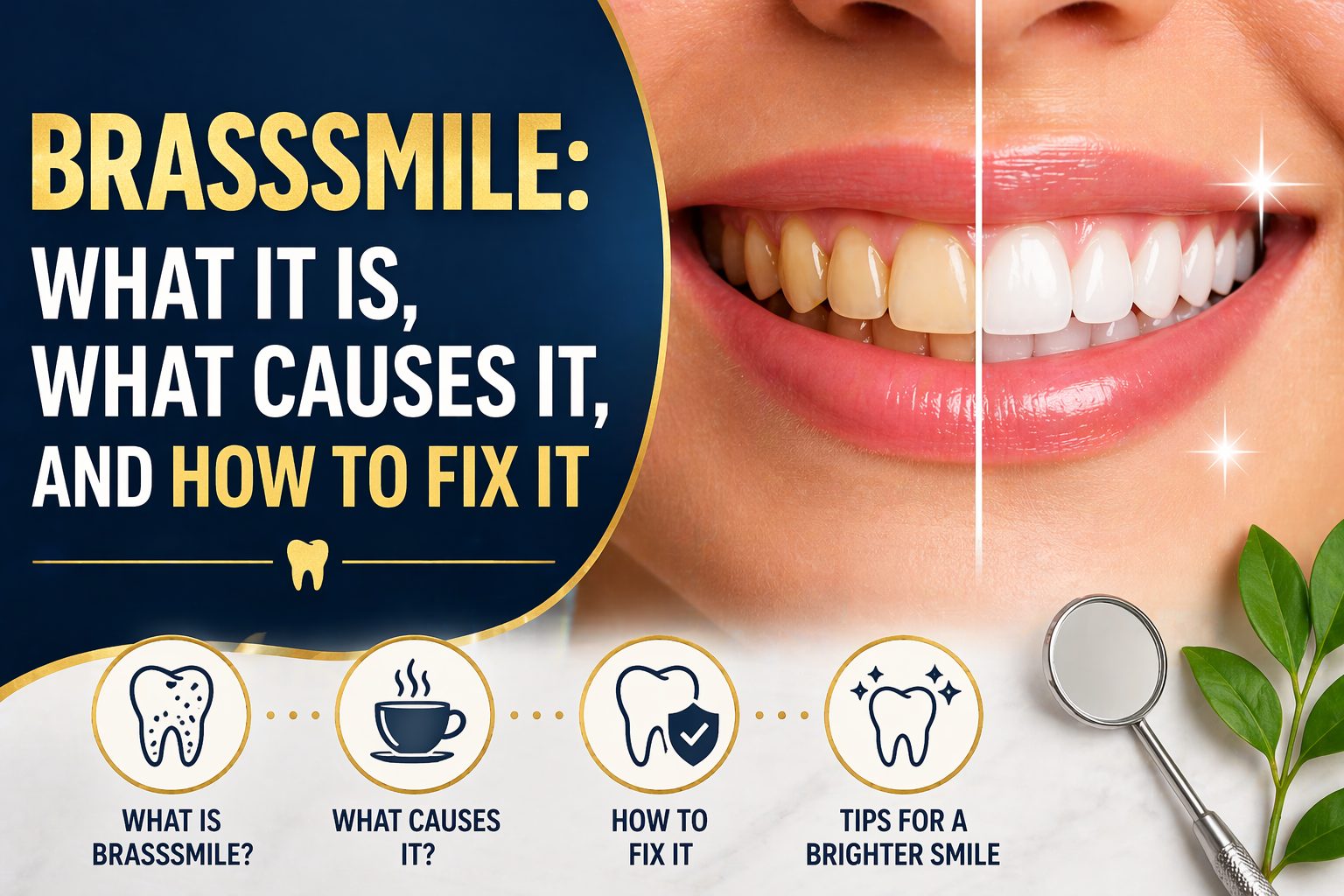
You take good care of your teeth. You brush, you floss, you rinse — and yet, when you look in the mirror, something about your smile feels off. The color looks warm, golden, or slightly dull. No whitening toothpaste seems to fix it. What you may be dealing with is commonly called a
brasssmile — a term that is gaining traction in dental and cosmetic circles to describe teeth with an unwanted brassy or yellowish tone.
In this guide, you will learn exactly what a brasssmile is, the most common causes behind it, how to identify it, and — most importantly — what you can do to fix it, both at home and with professional help.
What Is a Brasssmile?
A brasssmile refers to teeth that have taken on a warm, yellowish, or golden tone instead of a clean white or neutral ivory shade. The word “brassy” is borrowed from the world of hair coloring, where it describes the unwanted warm or orange tones that emerge after bleaching or color treatments.
When applied to teeth, a brasssmile captures that same frustrating warmth — the kind that makes a smile look stained or aged even when your oral hygiene is otherwise solid. It is a subtle but noticeable discoloration that many people experience, often without fully understanding why.
The Science Behind Tooth Color
Your tooth enamel is naturally semi-translucent. The color you actually see when you look at your teeth is a blend of two layers: the outer enamel and the dentin beneath it. Dentin is naturally yellow. As enamel thins over time — due to age, acidic foods, or abrasive brushing — more of that yellow dentin becomes visible. This is a major contributor to the brasssmile effect.
What Causes a Brasssmile?
Several everyday factors can lead to a brassy tone in your teeth. Understanding the root cause is key to choosing the right treatment.
1. Staining Foods and Drinks
Coffee, tea, red wine, and dark-colored sodas are among the most common culprits. These beverages contain chromogens — intensely pigmented molecules — along with tannins that help those pigments stick to enamel. Over months and years of daily consumption, these deposits build up and create a warm, discolored tone across the teeth.
2. Tobacco Use
Nicotine and tar from cigarettes or smokeless tobacco bind stubbornly to enamel. This produces a distinctly brassy or brownish-yellow stain that is often deeper and more resistant to surface-level whitening than dietary stains.
3. Enamel Erosion
Acidic foods (citrus fruits, vinegar-based foods, carbonated drinks) gradually wear down enamel. As this protective outer layer thins, the naturally yellow dentin underneath becomes increasingly visible, giving teeth that telltale warm, brassy tone — even if there is no external staining involved at all.
4. Age-Related Changes
As we age, enamel naturally thins while dentin continues to darken. This double effect makes the brasssmile more pronounced over time, which is why older adults often find their teeth look more yellow despite consistent oral care routines.
5. Medications and Medical Conditions
Certain antibiotics — particularly tetracyclines taken during childhood — can cause intrinsic staining within the tooth structure itself. Antihistamines, antipsychotics, and high blood pressure medications have also been linked to tooth discoloration. Intrinsic staining of this kind cannot be addressed with surface whitening alone.
6. Post-Whitening Brassiness
Ironically, whitening treatments themselves can sometimes contribute to a brasssmile. If whitening is done inconsistently or if teeth are not maintained properly after treatment, uneven bleaching can create a patchy, warm-toned result — especially at the gum line.
How to Identify a Brasssmile
Identifying a brasssmile is relatively simple once you know what to look for. Common signs include:
• Teeth appear yellow or golden, especially near the gum line
• Whitening toothpaste produces little to no visible improvement
• Your smile photographs darker or more yellow than it looks in person
• The discoloration is more visible on some teeth than others, especially front teeth
• Even after brushing, the warmth of the tone persists
Quick self-test: Hold a white piece of paper next to your teeth in natural light. If the contrast is noticeable and your teeth look clearly yellow or golden by comparison, you are likely dealing with some degree of a brasssmile.
How to Treat a Brasssmile
The good news is that a brasssmile is highly treatable. The right approach depends on whether the staining is extrinsic (on the surface) or intrinsic (within the tooth structure).
At-Home Treatments
• Whitening toothpastes: These use mild abrasives or low concentrations of hydrogen peroxide to polish surface stains. They are best for maintenance rather than significant transformation.
• Over-the-counter whitening strips: Strips containing hydrogen or carbamide peroxide can meaningfully lift surface stains over 1 to 2 weeks of consistent use.
• Oil pulling: Swishing coconut or sesame oil for 10 to 20 minutes may help reduce surface bacteria and mild staining over time. Evidence is limited but it is a safe addition to your routine.
• Baking soda paste: A small amount of baking soda mixed with water creates a mild abrasive that can help polish surface stains. Use no more than 1 to 2 times per week to avoid enamel wear.
Professional Treatments
For more significant or long-standing brasssmile cases, professional dental treatments deliver faster and more reliable results:
• In-office whitening: Highly concentrated hydrogen peroxide gels — often activated with a specialized light or laser — can brighten teeth by several shades in a single one-hour session.
• Custom take-home trays: Your dentist creates a tray molded precisely to your teeth and provides a prescription-strength whitening gel. Typically worn daily for two weeks, these offer stronger results than OTC strips.
• Dental veneers: When discoloration is intrinsic and cannot be whitened from the outside, porcelain veneers offer a highly effective solution. Thin shells are bonded to the front surface of the teeth, completely masking the brasssmile.
• Dental bonding: A tooth-colored resin applied and shaped directly on the tooth can cover moderate staining at a lower cost than veneers.
How to Prevent a Brasssmile From Coming Back
Treating a brasssmile is only half the battle. Preventing it from returning requires consistent habits:
• Rinse your mouth with water immediately after consuming staining drinks like coffee, tea, or wine
• Use a straw when drinking beverages that stain
• Brush teeth at least twice daily with a fluoride toothpaste
• Schedule professional cleanings every six months
• Limit acidic foods and drinks that erode enamel
• Quit or reduce tobacco use, which is one of the most significant contributors
• Use a touch-up whitening product monthly after completing a whitening course
Frequently Asked Questions About Brasssmile
Is a brasssmile the same as regular tooth yellowing?
Not exactly. Regular yellowing can occur even without surface staining and is largely due to enamel thinning that exposes the dentin underneath. A brasssmile specifically refers to a warm, golden, or brassy tone — often a combination of intrinsic yellowing and extrinsic surface staining. The term highlights the distinct warm quality of the discoloration, rather than a flat gray or plain ivory shade.
Can whitening toothpaste alone fix a brasssmile?
For mild surface staining, whitening toothpastes can help maintain brightness and slowly reduce discoloration. However, for established or intrinsic brasssmile cases, they are unlikely to produce significant results on their own. A more targeted treatment — such as whitening strips, professional bleaching, or veneers — will be needed.
How long does it take to fix a brasssmile?
It depends on the severity and the treatment chosen. In-office whitening can show dramatic results in a single session of around one hour. Take-home tray treatments typically take one to two weeks of consistent use. Lifestyle changes and at-home products may take several weeks to show noticeable improvement.
Is a brasssmile permanent?
In most cases, no. Extrinsic staining can be effectively removed with professional cleaning or whitening treatments. Intrinsic staining — such as that caused by tetracycline antibiotics — is more persistent but can be concealed successfully with veneers or bonding. Even age-related brasssmile effects can be significantly improved with the right approach.
Final Thoughts
A brasssmile is one of the most common and most underestimated dental concerns. The warm, golden discoloration it creates can quietly chip away at confidence — especially when it persists despite regular brushing and oral care. The important thing to understand is that it is not a reflection of poor hygiene; it is a natural result of dietary habits, aging, enamel chemistry, and environmental factors.
Whether you treat it at home with whitening strips or work with your dentist on a more comprehensive solution, a brasssmile is very much fixable. Start by identifying your likely cause, choose the treatment that matches the severity, and build habits that keep it from returning.
A brighter, more confident smile is entirely within reach.